

Why Women Make Great Financial Advisors: The Lens They Bring to Wealth and Well-Being
6 Perspectives Women Bring to the Financial Planning Table
For decades, the financial industry has often been portrayed through a numbers-first lens. Charts, market returns, tax strategies, and investment performance have long dominated the conversation.
Those things matter. But money is rarely just about money.
Money is personal. It influences our relationships, our sense of security, our opportunities, our priorities, and the future we are trying to create.
And financial planning itself is changing.
Research from the CFP Board has examined the industry’s movement toward more holistic financial planning and the role women can play in that evolution. Its research on female financial professionals found that women CFP® professionals can be particularly well positioned for an industry increasingly focused on holistic guidance and long-term client relationships.
That doesn’t mean every woman approaches financial planning the same way—or that men don’t bring many of these same strengths to the table.
It does mean that the experiences and perspectives women bring to a profession that has historically been male-dominated can add meaningful value.
Here are six ways that perspective can show up in financial planning.
1. Women Can Bring a Strong Listening Perspective
Financial planning isn’t simply about prescribing solutions. It starts with understanding people.
A financial advisor may need to uncover fears, hopes, values, priorities, and motivations before making recommendations. Why does someone want financial independence? What does retirement mean to them? What keeps them awake at night? What do they hope their money makes possible?
Those aren’t questions you answer with a calculator.
Research published in the Journal of Financial Planning reinforces the importance of this qualitative side of the relationship. The research points to communication and shared values as important contributors to client trust and notes that financial planning involves gathering information about a client’s values, attitudes, expectations, needs, goals, and priorities.
Women can bring life experiences and communication styles to the profession that contribute to these conversations.
And those conversations matter.
Clients may arrive carrying years of financial stress or uncertainty. They may be navigating divorce, the loss of a spouse, a career transition, caregiving responsibilities, retirement, or simply years of feeling overwhelmed by financial decisions.
Being heard doesn’t solve those problems.
But feeling understood can create the trust needed to begin working through them.
2. Women Can Bring a Holistic View
Financial planning touches nearly every area of life.
Retirement planning affects families and lifestyles. Insurance decisions can affect financial security. Estate planning reflects personal wishes and family dynamics. Career decisions influence income and long-term financial choices. Spending often reflects what matters most to us.
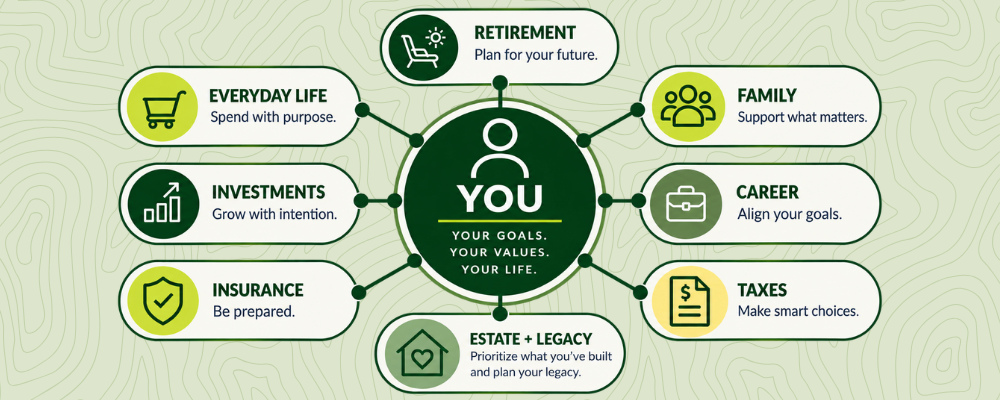
That’s why modern financial planning increasingly looks beyond individual accounts and investments.
Instead of simply asking:
How is this investment performing?
A broader planning conversation might also ask:
How does this decision affect your family?
What does financial freedom look like for you?
How do your finances support the life you want to live?
What tradeoffs are you willing, or unwilling, to make?
These questions connect money to purpose.
CFP Board research on women in the profession points to the industry’s continued movement toward more holistic financial planning—an approach that considers a client’s broader goals, priorities, and life alongside the numbers.
The goal isn’t to replace investment management or technical expertise with conversations about feelings.
It’s to put that technical expertise in the context of someone’s actual life.
3. Women Bring Experience Navigating Complexity
Life rarely gives us one priority at a time.
Career. Children. Aging parents. Relationships. Household responsibilities. Community commitments. Personal goals.
Women continue to play a significant role in unpaid caregiving in the United States, including care for aging family members. Data from the U.S. Bureau of Labor Statistics provides an important look at how caregiving responsibilities are distributed and the time involved in eldercare.
These experiences can provide valuable perspective in a profession where clients are constantly navigating competing priorities.
Financial planning itself is rarely black and white.
Should you save more for retirement or help your children with education?
Pay down debt or build investments?
Take the career opportunity or prioritize flexibility at home?
Spend more today or preserve more for tomorrow?
There isn’t always one universally “best” answer.
There are circumstances, timelines, tradeoffs, priorities, and values.
An advisor who is comfortable exploring those competing considerations can help a client evaluate choices in the context of the client’s broader financial life.
Sometimes personalized financial planning isn’t about identifying the obvious right answer.
It’s about making a thoughtful decision when more than one answer has value.
4. Women Can Bring a Relationship-Oriented Perspective
Financial planning is a relationship business.
Money conversations can require vulnerability. Clients may share information about assets and debts, but they may also reveal mistakes, fears, family tensions, goals, and uncertainties they don’t regularly discuss with other people.
Research in the Journal of Financial Planning has found meaningful relationships between communication, trust, and commitment in planner-client relationships.
That matters because financial planning isn’t a single transaction.
A client may work with an advisor while navigating:
- Marriage
- Divorce
- Career changes
- Business ownership
- Retirement
- Loss of a loved one
- An inheritance
- Caregiving responsibilities
The numbers change during those transitions.
So can the client’s priorities.
Technical knowledge remains essential, but so are communication, patience, and the ability to understand what has changed in a client’s life.
For women entering and shaping the financial-planning profession, those relationship-oriented skills can be an important part of the perspective they bring to the table.
5. Women Can Help Create Space for Thoughtful Money Conversations
Money remains difficult for many people to discuss.
Someone may worry about being judged because they don’t understand an investment term.
Another person may feel embarrassed about debt.
Someone else may have plenty of financial resources but little confidence making decisions.
And sometimes a client simply doesn’t know what questions to ask.
That makes the environment surrounding a financial conversation important.
Research conducted for the Financial Planning Association found notable differences between how well financial planners believed they understood their clients and how clients themselves perceived those interactions. For example, the research found gaps between planners’ and clients’ perceptions around recommendations based on personal goals and openness to discussing what clients value most in life.
That’s a useful reminder for every advisor, regardless of gender:
Believing you’re listening isn’t necessarily the same as making someone feel heard.
Creating room for questions, uncertainty, and honest conversations can help clients participate more fully in their own financial planning.
Women who bring collaborative and communication-focused perspectives into the profession can help strengthen that part of the advisor-client experience.
Because the goal isn’t for a client to sit quietly while a professional tells them what to do.
It’s for the client to understand enough to participate in decisions about their own life and their own money.
6. Women Can Broaden the Conversation About Wealth
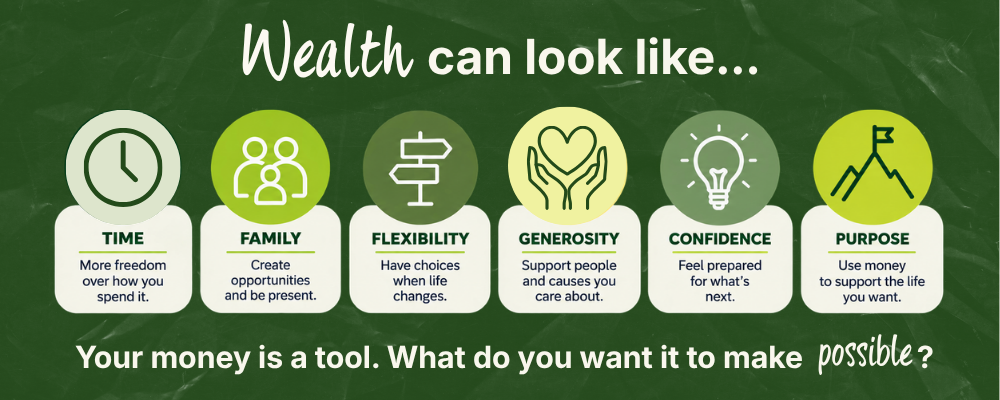
Success means different things to different people.
For one person, it may mean retiring early.
For another, it may mean providing opportunities for their children.
Someone else may value flexibility, generosity, independence, travel, time with family, or simply greater confidence about the future.
That is why financial success can’t always be reduced to a single number.
Net worth matters. Retirement income matters. Investment performance matters.
But those numbers exist to support something.
A life.
A financial plan becomes more personal when the conversation moves beyond:
“How much can we accumulate?”
and also asks:
“What do we want this money to make possible?”
Women can bring experiences and perspectives to financial planning that help broaden that conversation—particularly as the profession continues moving toward more comprehensive, goals-based planning.
Money is a tool.
The bigger question is what you want that tool to accomplish.
The Financial Industry Needs Different Perspectives
None of this means men cannot be excellent listeners, holistic thinkers, empathetic communicators, or relationship-oriented advisors.
And it certainly doesn’t mean all women think, communicate, or advise alike.
Great advisors come from every background.
The larger point is that diversity of perspective can strengthen a profession.
CFP Board research on diversity in financial planning has explored the importance of increasing representation within the profession and the potential value a more diverse workforce can provide to firms, clients, and the industry.
For an industry that has historically lacked gender diversity, bringing more women to the financial planning table means bringing more experiences, perspectives, and approaches into the room.
That’s good for the profession.
And it can be good for clients.
The future of financial planning will continue to require technical expertise. Markets, taxes, investments, insurance, retirement income, and estate considerations aren’t becoming less complicated.
But technical expertise alone doesn’t tell an advisor what matters most to the person sitting across the table.
That requires conversation.
Listening.
Curiosity.
And an understanding that behind every account balance is a human being trying to build a life.
Women have an important role to play in where that profession goes next.
Looking for a Financial Advisor Who Starts by Listening?
At Being Financial, we believe every financial plan should begin with understanding your goals, your values, and the life you want to build.
Whether you’re planning for retirement, navigating a major life transition, or simply looking for greater financial confidence, we’re here to help you take the next intentional step.
Start the Conversation