
Financial Planning Lessons from the Garden: Sometimes the Bugs Win
What My Garden Has Taught Me About Planning
Gardening has taught me that good planning isn’t about controlling every outcome. It’s about preparing thoughtfully, adapting when circumstances change, and recognizing that progress doesn’t always look the way we expected. I’ve found those lessons apply just as much to financial planning as they do to growing food.
Every year, I go into my garden with plans. I think about what I’ll grow, what worked the previous season, what I’d like to improve, and how much food I hope to put away for winter. I know there will be surprises. There always are. But I still start each growing season with an idea of what success will look like.
This year, success looked a little different.
With considerably less time to spend in the garden, I had to let go of some control. I couldn’t tend every plant, keep up with every pest, or preserve everything I hoped to harvest. Production was down, and there were plenty of things I wish I’d done differently.
But here’s the thing: I still ate something from my garden just about every day.
That might not have been the harvest I envisioned, but it was still a harvest. And looking back, I think this was the year my garden taught me the most about resilience. The more I think about it, the more I realize how much gardening and financial planning have in common. Both require preparation, patience, flexibility, and a willingness to adjust when circumstances change.
Sometimes Resilience Looks Like Lettuce
I grow a lot of things, but lettuce might be one of the most impressive plants in my garden.
It volunteers readily, showing up in places I didn’t necessarily intend to grow it. And somehow, it survives conditions that seem like they should finish it off.
After weeks of snow and ice covering the ground, I watched the winter weather begin to melt away and discovered that my lettuce had survived. The plants I’d protected were still there. So were some of the ones I hadn’t.
It wasn’t thriving because I’d managed every detail perfectly. It was simply resilient.
Of course, not everything that volunteers is quite so welcome.
My chives have apparently decided they belong everywhere. I’ve learned that scattering seed heads requires a little more thought than I sometimes give it. And after years of allowing lemon balm to go to seed, it’s gradually making its way into the garden from the edges.
There’s a balance between letting nature do its thing and recognizing when something needs a little direction.
That balance applies to plenty of things outside the garden, too.
A plan can give us direction without requiring us to control every detail. Sometimes the unexpected growth is worth keeping. Sometimes it needs to be redirected. And sometimes we discover that something is more resilient than we gave it credit for.
And Sometimes the Bugs Win
If the lettuce was this year’s lesson in resilience, the beans were my lesson in accepting defeat.
Mexican bean beetles won. Completely.
My early rounds of beans produced well, especially when I kept them covered. But as the season progressed and my time became more limited, things started slipping. The beetles found their way into later plantings, and my pole beans held on only as long as I could keep up with squishing bugs every day.
Eventually, I couldn’t.
The tomatoes weren’t much better.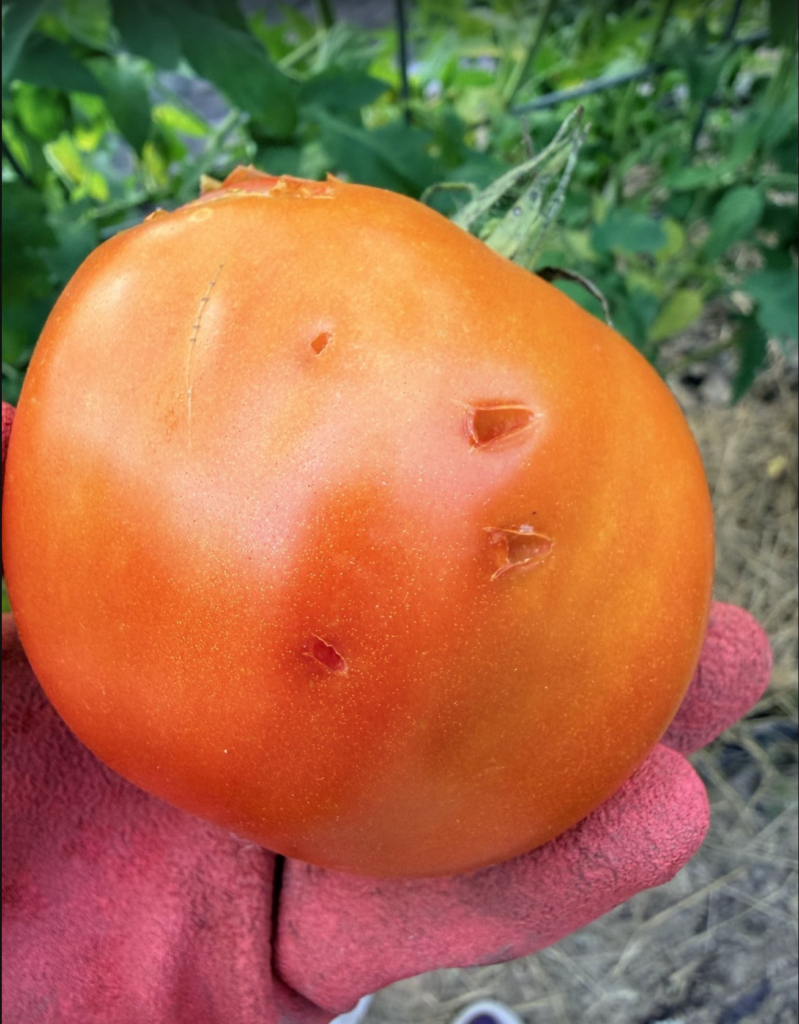
Production was disappointing, and for the first time, squirrels became a real problem. They apparently discovered that tomatoes are particularly delicious just as they’re ripening. Instead of taking an entire tomato, they preferred sampling several, leaving me with plenty of evidence of their visits and considerably fewer tomatoes worth harvesting.
I also didn’t have the time to prune the plants the way I normally would.
But not everything went wrong.
One experiment worked particularly well. I allowed buckwheat to volunteer and grow throughout the garden, and it seemed to help keep the tomato hornworms under control. As a bonus, when the buckwheat went to seed, my chickens enjoyed the extra treat.
I didn’t get the tomato harvest I wanted, but I learned something worth repeating.
And that’s an important distinction.
An outcome can be disappointing without the entire effort being a failure.
In financial planning, as in gardening, there will always be circumstances we can’t control. Markets change. Expenses surprise us. Careers take unexpected turns. Family responsibilities shift. Sometimes the strategies we thought would work don’t produce the results we hoped for.
That doesn’t mean planning was pointless.
It means we need to be willing to evaluate what’s happening, make adjustments, and carry what we’ve learned into the next season.
You Can’t Do Everything, and That’s Okay
One of the hardest things about having a large garden is that there’s always something that needs attention.
The weeds are generally manageable because I mulch heavily. But pests are another story. When you’re trying to manage them organically, it can feel like an endless battle. You spend time dealing with them one day, only to return the next and find they’ve brought reinforcements.
There’s always something ready to pick, too. Sometimes it’s enough for a meal but not enough to preserve. Other times, the harvest comes all at once, and suddenly the work shifts from growing food to making sure months of effort don’t go to waste.
Preserving what I grow matters to me. It’s part of how our garden supports our household throughout the year. The food we put away in summer helps keep our grocery bills down in winter.
But preserving takes time. And by the end of summer, time is usually the thing I’m shortest on.
This year, I couldn’t keep up with everything.
I had to decide what mattered most, what could wait, and what I was willing to let go.
That’s not always easy for someone who likes to plan.
But I’ve been reminded that having priorities doesn’t mean everything else stops mattering. It means recognizing that our resources, including our time and energy, are limited.
Financial planning requires similar choices.
We may want to save more for retirement, help our children, improve our homes, travel, support causes we believe in, and prepare for unexpected expenses. Those can all be worthwhile goals, but we don’t necessarily have the resources to pursue every one of them at the same time.
Sometimes we have to decide what needs our attention now, what can wait, and what a successful season realistically looks like.
All I Have to Do Is Get Near the Garden, and She Calls
There’s another thing my garden has taught me, although I seem to need the reminder every year.
Sometimes the hardest part is simply getting there.
I’ve worked all day. I’m tired. Dinner needs to be made. My family needs attention. The last thing I want is another hour of work.
And then I walk past the garden.
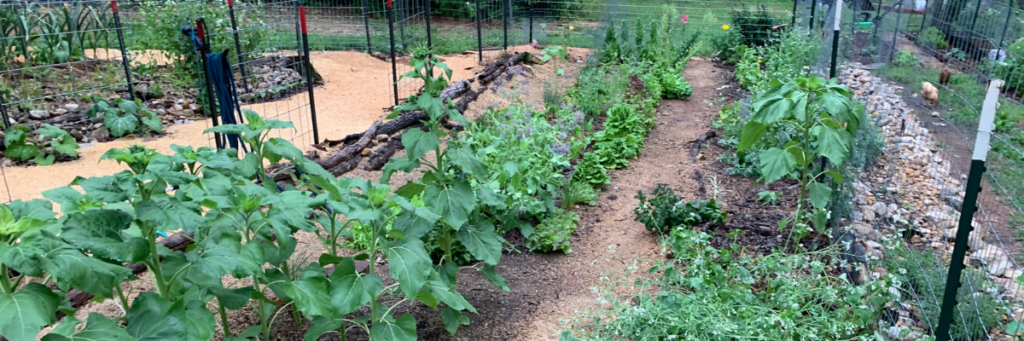
A flower blooming near the edge catches my attention, and I can’t help moving closer to look at it.
While I’m there, I notice a weed that needs pulling.
Through the fence, I spot something ready to harvest.
A plant needs to be trained up a cattle panel.
There’s a bug that needs squishing.
Another weed.
Another vegetable ready to pick.
Before I know it, an hour has passed, and it’s getting dark.
I have a pile of weeds ready for the compost, a basket of food to take into the kitchen, and a feeling I didn’t have when I walked outside.
Calming energy.
I haven’t been working through a carefully prioritized list. I’ve simply been moving from one thing that needs attention to another. And somehow, it all adds up.
I think that’s part of why I love gardening so much. There are a hundred things competing for my attention, but almost any one of them is a worthwhile place to begin.
I can see the progress.
The weeds are gone. The plant is supported. The vegetables are harvested. The garden is a little better than it was an hour earlier.
And instead of feeling drained by the work, I often feel restored by it.
There’s a lesson here that applies to managing money, too.
Financial planning can feel overwhelming when we look at everything we think we’re supposed to accomplish. Retirement accounts, investments, insurance, taxes, estate documents, savings goals, budgets, the list can seem endless.
It’s easy to become so focused on everything that needs doing that we don’t do anything at all.
But you don’t have to address every part of your financial life today.
Sometimes the most useful thing you can do is take one step.
Review an account. Ask a question. Find an important document. Start a conversation. Identify something you don’t understand.
You don’t have to finish the entire plan to make meaningful progress.
The Garden Will Never Be Finished
I’ve been gardening long enough to know there will never be a year when everything goes exactly as planned.
There will always be weeds, pests, weather, unexpected successes, and disappointing harvests. There will always be something I wish I’d done differently.
And there will always be another season.
This year, I produced less than I wanted. I didn’t preserve everything I’d hoped to. The beans were a disaster, and the squirrels ate more tomatoes than I care to admit.
But the lettuce survived the ice. The buckwheat helped the tomatoes. And the chickens? Well, they benefited from plenty of things that didn’t go according to plan. In my book, if it feeds the chickens, it isn’t a failure. Despite everything I didn’t accomplish, I still brought food from the garden into my kitchen almost every day.
That’s worth something.
Gardening has taught me that planning matters, but so does flexibility. That resilience doesn’t always look like thriving. Those setbacks are part of the process. And that sometimes, when everything feels overwhelming, the best thing you can do is walk outside and begin.
I don’t think the lesson is to stop making plans.
Quite the opposite.
A good plan doesn’t eliminate uncertainty. It gives you something worth tending.