

Financial Resilience
What Bees Can Teach Us About Building Wealth That Lasts
Financial resilience isn’t built overnight. It’s developed through consistent habits, adaptability, and the willingness to keep moving forward even when life feels uncertain.
Surprisingly, one of nature’s smallest creatures offers one of the best examples of what that kind of resilience looks like.
For decades, a popular myth about bees has circulated through classrooms, motivational speeches, and business seminars:
“According to the laws of aerodynamics, bees shouldn’t be able to fly.”
It’s one of those statements that instantly captures attention because it feels symbolic. The bee appears too round, too small-winged, too mechanically flawed to lift itself into the air. Yet every spring and summer, bees ignore the supposed impossibility and continue flying from flower to flower as if no one ever questioned them.
Scientifically speaking, bees are not actually violating the laws of physics. Early aerodynamic models simply failed to account for the unique way bees flap and rotate their wings. Modern science has since explained their flight mechanics in detail.
But the metaphor remains powerful.
Because in life, and especially when it comes to money, many people are told they simply aren’t “built” for financial success.
They’re told the odds are against them. They started too late. They don’t earn enough. They made too many mistakes. They carry too much debt. They didn’t grow up with money. They’re too old to begin investing. They’re too young to understand wealth. They’re simply “not built” for financial success.
And yet, like bees, some people build meaningful financial lives anyway.

What Is Financial Resilience?
Financial resilience is the ability to continue making thoughtful financial decisions despite setbacks, uncertainty, or changing circumstances.
It isn’t about avoiding challenges.
It’s about adapting to them while continuing to move toward long-term goals.
That kind of resilience doesn’t usually appear all at once.
It’s built one decision at a time.
The Financial Weight We Carry
Most people assume financial resilience comes from numbers alone, income, net worth, investment returns, or market performance.
But resilience usually begins somewhere else.
It begins in our mindset.
The average person carries invisible weight every day:
- Student loans
- Credit card debt
- Inflation
- Medical expenses
- Family responsibilities
- Economic uncertainty
- Fear of making the wrong decision
To outsiders, these burdens can make financial progress seem impossible.
Sometimes the person carrying them begins to believe they’re disqualified from financial freedom.
But resilience isn’t the absence of difficulty. It’s choosing to keep moving despite difficulty.
That’s exactly what bees represent.
A bee doesn’t spend time arguing with gravity. It adapts to it. Its wings beat hundreds of times every second, creating lift in ways early scientists didn’t yet understand.
Likewise, financially resilient people often succeed in ways traditional assumptions overlook.
Some build wealth slowly through consistency rather than extraordinary income. Some recover after bankruptcy. Some begin investing in their forties or fifties. Some start businesses after losing jobs. Some turn side projects into opportunities that change their family’s future.
The path may not look impressive at first. But momentum changes everything.
Small Habits Create Big Results
One bee seems insignificant.
One flower pollinated doesn’t appear transformative.
But together, bees support entire ecosystems. Much of the food we enjoy depends on their steady, consistent work.
Financial growth follows a similar pattern.
Small financial decisions often seem too insignificant to matter:
- Saving $20 each week
- Increasing a retirement contribution by 1%
- Paying more than the minimum payment on debt
- Reading one book about investing
- Meeting with a financial advisor
- Building an emergency fund one paycheck at a time
None of these actions feels life-changing in the moment.
But wealth, like pollination, is cumulative.
One of the greatest financial mistakes people make is underestimating the power of small actions repeated consistently over time. Over long periods, patient investors have often been rewarded more than those trying to perfectly time the market.
In that sense, bees offer a surprisingly sophisticated financial lesson. Persistence scales.
Why Financial Planning Isn’t Meant to Be Done Alone
Resilience isn’t just about what you do. It’s also about who helps you stay on course. 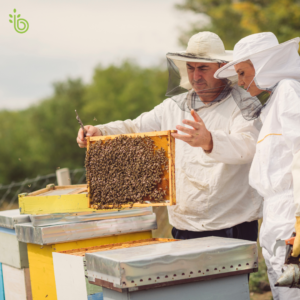
Bees don’t survive alone. A hive functions through cooperation, communication, and shared purpose. Every bee contributes to the health of the colony. There is structure, discipline, and long-term planning woven into the system.
Financial resilience works much the same way.
Many people try to manage every financial decision on their own. They avoid conversations about money because of shame, fear, or pride. Unfortunately, isolation often magnifies financial stress.
Strong financial planning is rarely a solo effort.
It may involve:
- A financial advisor
- A tax professional
- A spouse or partner
- A mentor
- A business coach
- A trusted community
Just as bees rely on the hive, many financially resilient people rely on trusted relationships and thoughtful guidance.
A financial advisor often serves as both strategist and steady voice during uncertain times.
When markets become volatile, emotions can tempt people to abandon long-term plans, stop investing, or make decisions based on fear. Good planning isn’t about predicting every twist in the road. It’s about building a financial life that’s prepared to adapt when those twists inevitably come.
Because financial success isn’t simply about earning higher returns. It’s about staying invested in your long-term goals long enough for consistency to matter.
Stop Waiting for the Perfect Time
Bees don’t wait for perfect conditions. They work through changing temperatures, uncertain weather, and environmental challenges. Their survival depends on action, not perfection.
Many people postpone financial planning because they believe they need ideal circumstances before they begin.
They tell themselves:
“I’ll invest when I make more money.”
“I’ll save after I pay everything off.”
“I’ll start retirement planning next year.”
“I’ll start my business when the economy improves.”
Unfortunately, waiting for certainty can become one of the most expensive financial decisions we make.
Markets fluctuate. Economies change. Life rarely unfolds exactly as planned. Perfection almost never arrives.
The financially resilient person understands that progress matters more than perfect timing. A modest investment started today may accomplish more over time than an ambitious plan postponed for years. Periods of market uncertainty have often been followed by recoveries, reminding long-term investors why maintaining perspective matters.
Like bees navigating changing weather, resilient investors continue building toward their goals even when conditions feel uncertain.
Adaptability Is a Financial Skill
One reason bees continue to fascinate scientists is their adaptability.
They communicate through movement. They adjust to changing environments. They continually adapt to survive.
Financial resilience requires that same flexibility.
Today’s economy changes quickly. Technology reshapes industries. Inflation affects purchasing power. Artificial intelligence is changing the workplace. Global events influence local markets almost instantly. Rigid financial thinking can become limiting.
Adaptable people continue learning.
They develop new skills. They diversify income. They revisit their financial plans. They adjust as life changes.
One lesson I’ve learned is this:
Durability beats prediction.
No one consistently predicts every market movement or every economic shift. But people who build flexible plans are often better prepared to navigate whatever comes next.
Wealth Creates Impact
Perhaps the most overlooked lesson from bees is this:
Their value extends far beyond themselves. Everywhere they go, things grow. Entire ecosystems flourish because of their work.
True wealth works the same way. Wealth isn’t simply accumulation. It’s impact.
Financial resilience creates the opportunity to:
- Support family members
- Create opportunities for children and grandchildren
- Give generously
- Build businesses
- Employ others
- Strengthen communities
- Leave a meaningful legacy
Money becomes most meaningful when it creates stability, opportunity, and generosity beyond ourselves.
That’s one reason I believe financial planning is about much more than numbers.
The best advisors don’t simply manage investments. They help people align their financial resources with the life they want to build and the impact they hope to leave behind.
Keep Flying Anyway
The bee never needed permission to fly.
It never paused to debate whether the odds were favorable enough.
It simply adapted, persisted, and continued its work.
People facing financial challenges can learn something powerful from that example.
You don’t need a perfect beginning. You don’t need flawless timing. You don’t need an extraordinary income. You don’t need to erase every past mistake before moving forward. You simply need movement.
Consistent movement.
Intentional movement.
Resilient movement.
Financial resilience is rarely built through dramatic breakthroughs. More often, it’s built through disciplined habits repeated over years, small choices made consistently, even when progress feels slow.
Like the bee, many financially successful people once appeared unlikely to succeed. Yet they kept moving anyway.
Perhaps that’s the real lesson.
The world often misunderstands resilience until it sees the results.
Financial resilience isn’t built in one decision. It’s built through thousands of intentional ones.
And like the bee, you may discover your greatest strength was never having perfect conditions.
It was choosing to keep moving anyway.